
What Is Organic Traffic? Benefits and Ways to Increase It
Organic traffic refers to visitors who reach a website through unpaid search engine results. When someone searches for information, products, or services on Google, Bing, or other search engines and clicks a regular search result instead of an advertisement, that visit is considered organic traffic.
Organic traffic is an important part of Search Engine Optimization (SEO) because it helps websites attract people who are actively looking for relevant information. Businesses can increase organic traffic by targeting relevant keywords, publishing helpful content, improving website performance, and earning quality backlinks.
Today, organic visibility also extends to AI-powered search experiences. Google AI Overviews and AI Mode can provide additional opportunities for websites to appear as sources, while visits from platforms such as ChatGPT may be recorded separately as AI referral traffic in Google Analytics 4.
What Is Organic Traffic?
Organic Traffic is one of the core achievement of SEO and also a first purpose of optimization. It has high return rate of investment, its gives the highly ranked by google and get highly connected content and relevancy to the users. More pages ranking means getting more sales, leads and increase conversion rate for business or any another organisations.
Also, SEO involves improving a website’s content, technical performance, structure, and overall authority so search engines can better understand and rank its pages for relevant searches.
Mostly Important Organic traffic is different from other types of traffic such a referral traffic, direct traffic and paid traffic.
Gaining Organic Traffic improvement depends on most factors including Topic Authority, EEAT, Search Intent, Keyword Research, AEO, LLM Optimization and Highly ranking factors.
What Are the Benefits of Organic Website Traffic?
Organic traffic can bring visitors to your website without paying for every click. It is especially useful when people discover your website while actively searching for information, products, or services related to your business.
Key Benefits of Organic Traffic
- Targeted visitors: People often arrive through searches related to their specific needs, making organic traffic more relevant.
- Long-term value: A well-optimized page can continue attracting visitors for months or even years if it remains useful and competitive.
- Scalable growth: Adding useful content and improving existing pages can gradually expand your website’s search visibility.
- Builds brand visibility: Appearing in search results regularly can help more people discover and recognize your brand.
- Supports conversions: Visitors who find your website through relevant searches may be more likely to take actions such as making a purchase, submitting a form, or contacting your business.
Limitations of Organic Traffic
- Takes time: SEO usually does not produce immediate results. Rankings and traffic often grow gradually with consistent effort.
- Requires investment: Although organic clicks are unpaid, content creation, SEO, technical improvements, and link building require time and resources.
- Algorithm changes: Search engine updates can affect rankings and may cause traffic to increase or decrease.
- Strong competition: Popular keywords can have many competing websites, making it harder for new pages to rank.
- Changing search results: Features such as AI Overviews, AI Mode, featured snippets, and other zero-click results can answer users directly on the search page, which may reduce clicks to websites.
Organic Traffic vs. Paid Traffic
Organic traffic comes from unpaid search results, while paid traffic comes from advertisements. Paid campaigns can generate visibility quickly, but traffic usually depends on an active advertising budget. Organic SEO generally takes more time to build but can continue generating search visibility without paying for every individual visit.
For this reason, many businesses use SEO and paid advertising together rather than treating them as competing strategies.
| Organic Traffic | Paid Traffic |
| Comes from unpaid search results. | Comes from paid advertisements. |
| Requires SEO and content optimization. | Requires an advertising budget. |
| Usually takes time to build. | Can bring visitors quickly after a campaign starts. |
| Traffic can continue as long as pages maintain visibility. | Traffic usually decreases when the ad campaign stops. |
| Depends on rankings, relevance, content quality, and search intent. | Depends on budget, bidding, targeting, and ad quality. |
| There is no direct cost for each click. | Advertisers generally pay for clicks, impressions, or other actions. |
| Useful for building long-term search visibility. | Useful for reaching specific audiences and supporting short-term campaigns. |
| Examples include Google and Bing organic results. | Examples include Google Ads and paid social media campaigns. |
Ways to Increase Organic Traffic
Increasing organic traffic takes more than simply adding keywords to a website. A strong organic growth strategy combines keyword research, helpful content, on-page SEO, technical SEO, internal linking, and authority building.
Here are some practical ways to increase organic traffic:
Find the Right Keywords
Start by researching keywords your target audience actually searches for. Focus on relevant terms that match your products, services, or content.
Tools such as Semrush, Ahrefs, Google Keyword Planner, and Google Search Console can help you find keywords, search queries, search volume, competition, and related terms.
Look beyond high-volume keywords and include long-tail keywords and question-based searches. These often have more specific search intent and can help attract relevant visitors.
Understand Search Intent
Before creating or updating a page, understand what users expect to find when they search for a particular keyword.
Search intent can generally be:
- Informational: Users want to learn something.
- Navigational: Users are looking for a specific website or page.
- Commercial: Users are researching products or services before making a decision.
- Transactional: Users are ready to take an action, such as buying or signing up.
Creating content that matches the intent behind a search can make the page more useful and relevant.
Create High-Quality, Helpful Content
Publish content that provides clear answers and useful information instead of creating pages only to target keywords.
Good content should:
- Answer the main question clearly
- Provide useful details and examples
- Use accurate and up-to-date information
- Cover important subtopics
- Be easy to read and scan
- Add information that competing pages may not provide
You can also improve older content instead of always publishing new pages. Updating outdated information, adding missing sections, and improving clarity can help maintain its search visibility.
Optimize Pages for On-Page SEO
Make it easy for both users and search engines to understand web pages. Review important on-page elements such as:
- Title tags
- Meta descriptions
- H1 and other headings
- URLs
- Image alt text
- Internal links
- Keyword usage
- Content structure
Use keywords naturally rather than forcing them into every section. The page should read naturally while clearly covering the main topic.
Build Strong Internal Links
Internal links connect related pages on your website. They help users discover additional content and give search engines more context about your website structure.
Link from relevant pages to important content using descriptive anchor text. For example, a page about technical SEO could naturally link to a detailed guide about Core Web Vitals.
Improve Technical SEO
Technical problems can make it harder for search engines to crawl, index, and understand your website.
Check important areas such as:
- Crawlability and indexability
- XML sitemap
- Robots.txt
- Canonical tags
- Broken links
- Duplicate content
- Mobile usability
- Page speed
- Core Web Vitals
- HTTPS and website security
Regular technical SEO audits can help identify issues that may affect search visibility.
Earn Relevant Backlinks
Backlinks from relevant and trustworthy websites can support your website’s authority and visibility. Focus on earning links naturally rather than building large numbers of low-quality links.
Useful approaches include digital PR, original research, expert contributions, useful resources, industry partnerships, and linkable content.
The quality and relevance of backlinks matter more than simply increasing the number of links.
Improve Pages That Are Already Getting Traffic
You do not always need to create new content to increase organic traffic. Look at pages that already receive impressions but have low clicks or pages ranking near the top of the search results.
Use Google Search Console and Semrush to identify opportunities. You may be able to improve these pages by:
- Updating outdated information
- Improving the title and meta description
- Adding missing topics
- Answering related questions
- Improving internal links
- Making the content easier to read
Small improvements to existing pages can sometimes create additional search visibility.
Optimize for SERP Features and AI Search
Search results now include features such as featured snippets, People Also Ask, AI Overviews, and AI Mode.
Create content that gives clear and direct answers to relevant questions. Use descriptive headings, short explanations, lists, tables, structured data where appropriate, and reliable information.
There is no guarantee that a page will appear in a particular SERP feature or AI-generated answer, but clear and well-structured content can make information easier for search systems to understand.
Monitor SEO Performance
Track your organic performance regularly to understand what is working and where improvements are needed.
Useful tools include:
- Google Search Console for impressions, clicks, queries, CTR, and search performance
- Google Analytics 4 for organic users, engagement, and conversions
- Semrush or Ahrefs for keyword rankings, competitors, backlinks, and visibility
Focus on meaningful metrics such as organic traffic, rankings, impressions, clicks, CTR, conversions, and revenue, rather than looking at traffic numbers alone.
Keep Improving Your SEO Strategy
SEO is an ongoing process. Search behavior, competitors, search results, and search engine systems can change over time.
Regularly review your content, identify pages that are losing traffic, monitor technical issues, and look for new keyword and content opportunities. Consistent improvements can help your website maintain and grow its organic visibility over time.
How Does AI Search Affect Organic Traffic?
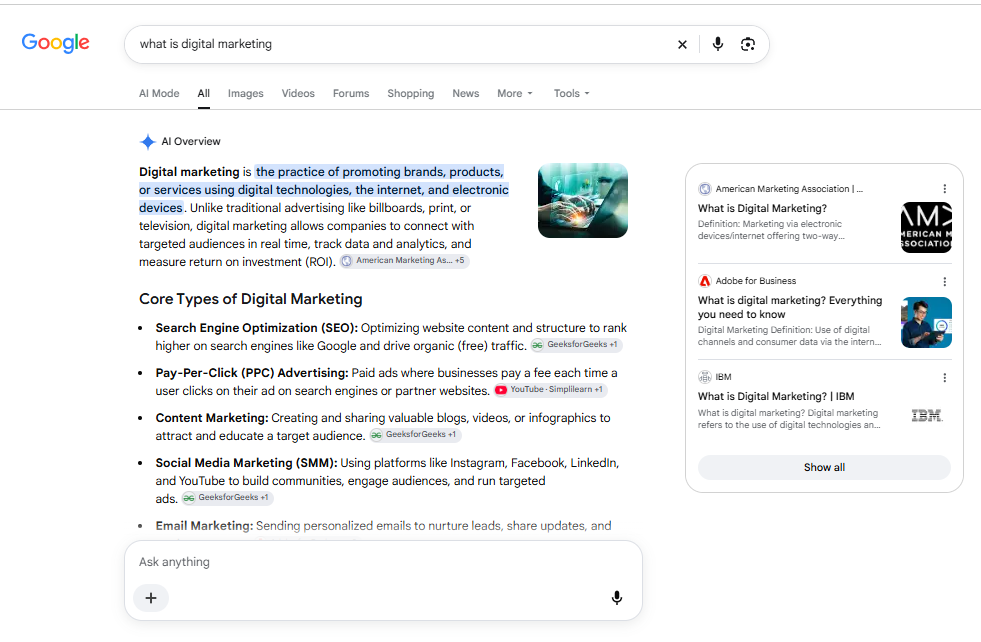
AI-powered search is changing how people discover information online. Instead of clicking through several websites to find an answer, users can now receive summarized information directly from tools such as Google AI Overviews, Google AI Mode, and ChatGPT.
This can change the amount and type of traffic websites receive from search. For some queries, users may get enough information from an AI-generated response and decide not to visit a website. This can reduce clicks from traditional search results, particularly for simple informational searches.
At the same time, AI search creates another way for websites to gain visibility. AI-generated answers may include links or citations to websites that provide useful information. Users who want to explore the topic further can click those sources and visit the website.
How AI Search Can Affect Organic Traffic
AI search can influence organic traffic in several ways:
- Fewer clicks for some searches: Users may get a complete or partial answer without opening a search result.
- More search visibility opportunities: A website can potentially appear as a cited source within an AI-generated answer.
- Changes in user behavior: People may use longer, conversational questions instead of short keyword searches.
- Greater importance of specific answers: AI systems need to identify useful information from individual sections of a page.
- More competition for visibility: Websites may compete for both traditional search rankings and inclusion in AI-generated results.
- Changes in traffic quality: Visitors who click an AI citation may already have more context about the topic before reaching the website.
For this reason, SEO is no longer only about getting a page to rank for a keyword. Content should also make it easy for search systems to understand the topic, identify important information, and connect individual sections with relevant questions.
How to Optimize for Organic Traffic in AI Search
The fundamentals of SEO still provide the foundation for organic visibility. However, content can be structured in ways that work well for both traditional search and AI-powered search.
1. Make Sure Search Engines Can Access Website
Technical SEO is the starting point. Search engines need to be able to crawl and index important pages before those pages can appear in search results or potentially be used as sources.
Check areas such as:
- Crawlability
- Indexability
- XML sitemaps
- Robots.txt
- Canonical tags
- Redirects
- Broken links
- Duplicate pages
- Mobile usability
- Page speed
- Core Web Vitals
- HTTPS
Regular technical checks can help identify issues that prevent important content from being properly discovered or indexed.
2. Research What Audience Searches For
Keyword research helps identify the topics, questions, and phrases your audience uses.
Do not focus only on short, high-volume keywords. Include:
- Long-tail keywords
- Question-based searches
- Conversational queries
- Related topics
- Comparison searches
- Problem-based searches
For example, instead of targeting only “content optimization,” related searches could include “how to optimize content for SEO” or “how often should website content be updated?”
Understanding these variations helps you create content that addresses the broader needs behind a search.
3. Match Content With Search Intent
Before creating a page, understand why someone is searching for the topic.
A query may have informational, commercial, navigational, or transactional intent. The content should match what the user expects to find.
For example, someone searching “what is technical SEO” probably wants an explanation, while someone searching “technical SEO agency” may be looking for a service.
Matching search intent can improve the usefulness of the page and reduce the chance of creating content that does not satisfy the user’s needs.
4. Give Clear Answers
AI systems often need to identify specific information from a larger page. Make important answers easy to find. Avoid making users or search systems go through several paragraphs before reaching the main point.
5. Create Self-Contained Sections
Each major section should explain its topic clearly enough to be understood on its own.
This is particularly useful for longer articles where different sections cover different questions. Use descriptive H2 and H3 headings and keep the information under each heading focused.
For example:
What Is Technical SEO?
Give the definition and main purpose.
Why Is Technical SEO Important?
Explain how technical factors affect crawling, indexing, and user experience.
How to Improve Technical SEO
Provide practical steps.
This structure makes the article easier to scan and helps search systems understand the purpose of each section.
6. Use Clear Content Formatting
Good formatting benefits both readers and search systems.
Use:
- Descriptive headings
- Short paragraphs
- Bullet points
- Numbered steps
- Tables for comparisons
- Definitions
- Examples
- Relevant internal links
Avoid large blocks of text when the information can be presented more clearly in a list or table.
7. Support Important Claims With Reliable Information
AI-generated answers can sometimes contain inaccurate information. Providing reliable and well-supported content can help establish the credibility of your website.
Where appropriate, support important claims with:
- Original research
- Relevant statistics
- Official sources
- Industry data
- Expert insights
- First-hand experience
Do not add sources simply to make a page look authoritative. Sources should genuinely support the information being presented.
8. Build Topical Authority
Covering a topic thoroughly can help demonstrate expertise and create stronger connections between related pages.
Instead of publishing one article about a broad subject, create a group of useful pages covering important subtopics.
For example, a website covering SEO could have separate resources about:
- Keyword research
- On-page SEO
- Technical SEO
- Internal linking
- Link building
- Content optimization
- Semantic SEO
- Search intent
Connect related pages with relevant internal links so users and search engines can understand how the topics relate to each other.
9. Strengthen Website’s Authority
Relevant backlinks and brand mentions can contribute to a website’s overall authority and visibility.
Focus on earning links naturally through:
- Original research
- Useful guides
- Industry resources
- Expert contributions
- Digital PR
- Data-driven content
- Valuable tools or resources
The goal should be to earn references from relevant and trustworthy websites rather than simply increasing the number of backlinks.
10. Keep Important Content Updated
Search behavior and information can change over time. An article that was accurate a year ago may now contain outdated statistics, examples, links, or recommendations.
Review important pages periodically and update:
- Statistics
- Dates
- Examples
- Screenshots
- External references
- Product or service information
- Outdated statements
Updating content can help maintain its usefulness and relevance.
11. Optimize for Traditional Search and AI Search Together
You do not need completely separate content strategies for traditional search and AI search.
Many of the same practices support both:
| Traditional SEO | AI Search |
| Search intent | Direct answers |
| Keyword research | Question-based content |
| Helpful content | Clear, extractable information |
| Internal links | Strong topic relationships |
| Backlinks | Citations and references |
| Technical SEO | Crawlable and accessible content |
| Structured content | Well-defined sections |
| Authority | Reliable and trustworthy information |
The important difference is that traditional search often focuses on page-level visibility, while AI search can also depend on whether specific information within a page is useful for answering a question.
12. Measure More Than Organic Clicks
Organic traffic is still an important SEO metric, but it should not be the only one you monitor.
Track metrics such as:
- Organic clicks
- Search impressions
- Keyword rankings
- Click-through rate
- Organic conversions
- Engagement
- +Referral traffic
- Brand searches
- AI mentions
- AI citations
- Pages cited in AI answers
Looking at these signals together can provide a better understanding of how your website is performing across traditional and AI-powered search.
The Future of Organic Traffic and AI Search
AI search is changing the path users take from searching for information to visiting a website. Some searches may produce fewer clicks because users can get answers directly in the search experience, while other searches may introduce new opportunities through citations and follow-up queries.
For website owners, the focus should remain on creating accurate, useful, original, and well-structured content. Strong technical SEO, relevant topics, clear answers, reliable sources, and website authority can help content remain discoverable as search continues to evolve.
The goal is not to optimize only for traditional search or only for AI. It is to create content that provides genuine value to users and can be clearly understood across different search experiences.
How Can You Track Organic Traffic?
Tools such as Google Analytics 4 (GA4) can be used to monitor organic search traffic, engagement, conversions, and other website activity. Google Search Console can provide additional information about organic search performance, including impressions, clicks, search queries, and the pages appearing in Google Search.
Overall, organic traffic is an important part of SEO because it connects a website with people who are actively searching for related information, products, or services.
Frequently Asked Questions About Organic Traffic
What is organic and inorganic traffic?
Organic Traffic: Visitors who reach a website through unpaid search engine results. It is mainly driven by SEO and helpful content.
Inorganic Traffic: Visitors who reach a website through paid advertising, such as Google Ads or social media ads.
Why Is Organic Traffic Important?
Organic traffic can provide several benefits:
- No payment for every click: Unlike paid advertising, businesses do not pay the search engine each time someone clicks an organic result.
- Long-term potential: A well-optimized page can continue attracting visitors for months or even years, although rankings can change over time.
- Relevant visitors: SEO targets searches related to the website’s products, services, or topics.
- Brand visibility: Appearing in organic search results can help more people discover and recognize a brand.
- Supports conversions: Relevant organic visitors can become leads, subscribers, customers, or returning users.z
However, organic traffic should not always be described as completely “free.” SEO requires investment in content creation, technical improvements, keyword research, website maintenance, and link building.
What Factors Affect Organic Traffic?
Search rankings depend on many signals, and search engines do not use one fixed list of ranking factors. Some important areas include:
- Creating helpful, accurate, and up-to-date content
- Matching content with search intent
- Using relevant keywords naturally
- Building a clear website structure
- Improving page experience and technical SEO
- Making pages easy for search engines to crawl and index
- Earning relevant and trustworthy backlinks
- Building topical authority
- Improving website usability and mobile experience
- Keeping important information accurate and current
How to get organic traffic to a website?
For increasing organic traffic by targeting relevant keywords, publishing helpful content, improving on-page SEO, building quality backlinks, and fixing technical SEO issues.
Key steps to get organic traffic:
-
Keyword Research: Find relevant keywords with search demand and realistic competition.
-
Create Quality Content: Publish original, helpful articles that answer users’ questions.
-
Optimize On-Page SEO: Improve title tags, meta descriptions, headings, URLs, and internal links.
-
Fix Technical SEO: Improve website speed, mobile usability, indexing, and crawlability.
-
Build Backlinks: Earn links from relevant, trustworthy websites.
-
Use Google Search Console: Monitor clicks, impressions, rankings, and indexing issues.
-
Update Old Content: Refresh outdated information and improve pages that are losing traffic.
Build Topical Authority: Publish related articles and connect them through relevant internal links.
How do companies track organic traffic on their websites?
Companies track organic traffic using SEO and analytics tools such as:
-
Google Analytics 4 (GA4): Measures organic visitors, sessions, engagement, and conversions.
-
Google Search Console (GSC): Tracks clicks, impressions, CTR, and average keyword positions.
-
Ahrefs: Estimates organic traffic and monitors keyword rankings.
-
Semrush: Tracks organic traffic, keyword performance, and competitors.